Free Ebook End the Fed, by Ron Paul

Free Ebook End the Fed, by Ron Paul

One that now becomes a talking resource is End The Fed, By Ron Paul This is exactly what you can really feel when looking or reading the title of this book. This book has efficiently affect the viewers from the many countries to get the perception. This is why it tends to be among the most favourite publications to read lately. Will you be among them? It's depending on your option to select this book as yours or otherwise.

End the Fed, by Ron Paul

End the Fed, by Ron Paul


End the Fed, by Ron Paul


Free Ebook End the Fed, by Ron Paul

Ways to win the obstacles that constantly require you to work rarely? Get the motivation, even more experiences, even more methods, as well as much more understanding. And also where is the area to obtain it? Naturally, lots of areas ready colleges and also lots of points ready instructor for you. As well as publication, as the home window to obtain open the world becomes one of the choice that you have to obtain. What type of publication? Of course guide that will support pertaining to your need.

And below, that publication is End The Fed, By Ron Paul, as you need it satisfying the subject of your challenges. Life is difficulties, works, and duties are additionally obstacles, and also there are several points to be challenges. When you are absolutely overwhelmed, just get this book, as well as pick the vital details from guide. The web content of this might be made complex as well as there are several styles, yet reviewing based on the topic or reading web page by page could aid you to understand just that book.

The benefits that you could acquire from reviewing sort of End The Fed, By Ron Paul will certainly be in some ways. Locate this book as your selected reading material that you truly want to do. After looking for some stores and also have not found it, now this is your supreme time to get it. You have actually located it. This soft documents publication will certainly motivate you checking out behavior to expand quicker. It's because the soft file can be checked out conveniently in any time that you want to review and have eager.

recognizing even more regarding this publication, you can expose exactly how this book is necessary for you to check out. This is just one of the reasons that you should read it. Nonetheless, today End The Fed, By Ron Paul can be suggested to get rid of the issues that you encounter currently, probably. Even you have the appropriate choice, getting information and factors to consider from a few other resources are requirement. You might have more times to find out about the issues and how to solve it. When you need home entertainment to earn enjoyable, you could get some from this book.

End the Fed, by Ron Paul

From Publishers Weekly

At first glance, abolishing the Federal Reserve and returning to the gold standard seems a quaintly eccentric idea, but Texas congressman Paul presents a plan to eliminate our country's central bank, and return to a private banking system, that's both serious and plausible. The questionable aspects involve Paul's predicted results: not only will ending the Fed eliminate inflation (the government cannot print more money than it has gold reserves), but also business booms and busts, wars, income inequality, trade imbalances and the growth of government. Further, and perhaps most important, it would "disempower the secretive cartel of powerful money managers who exercise disproportionate influence over the conduct of public policy." Paul tends to gloss over those periods in history, including the Panic of 1907, in which private banking and the gold standard were law: "the bad reputation of nineteenth century American banking... is largely the result of... propaganda agitating for the creation of the Fed." With respect to "secretive cartels," Paul takes up the interesting question of whether J.P. Morgan is in fact preferable to Ben Bernanke. An engaging response to big-government solutions for the financial crisis, this knowledgeable and opinionated look at U.S. economics, from a firebrand public servant, should provoke much thought. Copyright © Reed Business Information, a division of Reed Elsevier Inc. All rights reserved.

Read more

Review

"Rarely has a single book not only challenged, but decisively changed my mind. "--Arlo Guthrie"Everyone must read this book--Congressmen and college students, Democrats and Republicans--all Americans."--Vince Vaughn

Read more

See all Editorial Reviews

Product details

Hardcover: 224 pages

Publisher: Grand Central Publishing; 1st edition (September 16, 2009)

Language: English

ISBN-10: 9780446549196

ISBN-13: 978-0446549196

ASIN: 0446549193

Product Dimensions:

5.5 x 1 x 8.2 inches

Shipping Weight: 1 pounds (View shipping rates and policies)

Average Customer Review:

4.6 out of 5 stars

703 customer reviews

Amazon Best Sellers Rank:

#221,687 in Books (See Top 100 in Books)

In his latest book Congressman Ron Paul exposes the Illusion that the Federal Reserve System is the fix for our economic troubles.One subtle reality that is hitting home is that the United States as a nation is not immune to a calamity triggered by bad monetary policy.Ron Paul offers up some terrific side-effects of phasing out the Fed.Some of the positives effects of phasing out the Fed that I find appealing are the ending of financial manipulation during election cycles and the end of interventionism/empirical expansion.Some of the quotes that I thought drove the point home are:"What the largest banks desire is precisely what we might expect any large corporation to desire: privatized profits and socialized losses." From page 14." The process of monetary debasement by inflating the money supply, redistributes wealth unfairly and dangerously from the middle class to the wealthy." From page 154.Congressman Paul endorses "Austrian economics" versus Keynesian economics.He was correct about the economy before and I think he is correct about the future of the economy.We have a monopoly in the Fed with no oversight.And I think he's right about the attitude and in large part ignorance of Congress when it comes to the economy.END THE FED is another book by Ron Paul that I highly recommend. Especially if you want to explore why we should dump the Fed.

I'm not sure I agree with Ron Paul on all of his political perspectives, but one thing I for sure agree on is his view of Money and Currency!The Federal Reserve is the monster inside every Americans' medicine cabinet, dark closet and under every bed. We can't escape it and yet we work harder each day to pay our taxes and bills and even when we think we are sort of getting a little ahead, we are drowning due to inflation from a debased currency. Most don't know how to deal with this monster, so we ignore it and hope our ignorance will keep us from being one of the more tragic victims.However, make no mistake, we will all drown and be destroyed by this monster...except for the 1% at the top who will always and forever keep their pile of riches. And the amazing part, is that this monster is actually CREATED by that same 1% in order to enslave fellow Americans. If that fact alone does not make you furious and ready to go to war against the crooks in charge, then you are living in a fantasy and delusional denial.Three families are destroying the US and they are using the Federal Reserve as their main tool. How? By giving politicians free money which they can use to spend on their projects and to effectively buy votes. So these three families leverage the power-hungry types by giving them money as a means to get them power. In return, the power-greedy politicians agree to tax future Americans by force, and give the profits back to these same families. It is an immoral scam, 100% unconstitutional, and yet it is the good ol' USA you live in right now! Feeling patriotic anyone??Who are these three families who are secretly waging war against every man, woman and child in the US?The Rothschilds (Bank of America), the Rockefellers (Citibank), and the Morgans (Chase).What we will do to fight against these families who are content to drown the rest of us so that they can not only survive, but live in grandeur and luxury? This is exactly like 1917 Russia. Will we storm the bankers' palaces, strip them of power and cast them down? Or will we just give up and let them continue to drown us instead? Who among you will rise up and reject the status quo? Who among you will throw off the modern slave chains which now take the form of inflationary tax from devalued currency?If any of you will stand up and say, "give me liberty or give me death", now is your hour to join the movement to ban the Federal Reserve. And it really is that simple. We don't actually even need to physically fight anyone. All we need to do is use the political channels to End the Fed. If you are up for this, this book will help you gain great insights. I highly suggest you read it.

I have been meaning to read this book for years and am glad I finally did so. It is basically a monetary history of the United States.The main event is the establishment of the Federal Reserve in 1913. Since then the dollar has lost 95 percent of its value. This means today's dollar is worth 5 cents in 1913 dollars and it takes about twenty dollars today to equal the value of a 1913 dollar. So the main purpose of the Fed has been to devalue the dollar through inflation. This has allowed politicians to spend endlessly to keep themselves in power while pushing the nation towards bankruptcy.Other important events include FDR's confiscation of all privately held gold in 1933. What the government will confiscate in the next economic crisis to save itself we do not yet know. In 1971, Nixon was forced to have the United States default on its promise to exchange an ounce of gold for every 35 dollars, thereby taking the country off the gold standard. This allowed the Federal Reserve to print fiat money, meaning it could print as much money as it wanted. This has led to a national debt of $18 trillion and widespread economic and social disorder.Paul believes the main downfall of the United States was the famous Supreme Court case of McCulloch in 1819. This was only 31 years after the US Constitution was written allowing only gold and silver money. The Supreme Court decided that the Constitution had "implied powers" letting Congress do whatever it felt was "necessary and proper" to govern the country. This meant Congress could basically do anything it wanted and led to its establishing the Federal Reserve and its nonstop depreciation of the dollar.I believe the downfall came even earlier with the Marbury case where the Supreme Court also decided that only it had the power to decide what is constitutional, thereby giving its unelected members unlimited power over the elected branches of Congress and the Presidency, as well as all the states. This was the biggest power grab in American history and has allowed the court to overturn any act of any legislature and any act directly approved by voters it does not like. This is easy because the Constitution is worded broadly so the court can decide anything is unconstitutional. All of this has led to the spectacle of people breathlessly waiting to hear what policies these elite institutions have decided to impose on the country, while maintaining the myth that they are in control because they live in a "democracy."Paul believes the artificial economic boom based on inflated fiat currency, which started in 1971, basically came to an end in 2000 with the stock market crash led by the tech sector. Since then the economy has struggled to improve and the average American has hardly prospered at all. The Great Recession of 2008 was basically caused by inflated dollars pouring into real estate. The bubble happened there because the federal government through the Community Reinvestment Act mandated that poor people, especially minorities, be given mortgages regardless of their creditworthiness. The subprime category was established to comply with this mandate. Paul rightly calls this affirmative action lending. The main factor in lending became race instead of ability to pay and credit history.The United States is now obviously in decline and social disorder is spreading after a brief hiatus. Just look at places like Ferguson and Baltimore where the police were ordered to stand down and let the riots continue. Meanwhile the rioters were having a great time destroying property, taking selfies, and posing for television cameras. Resisting arrest has been basically decriminalized in the mainstream media.It is apparent that the country is in the same "bread and circuses" stage as the declining Roman Empire. Today the bread is massive welfare spending and massive inflation of the currency. The main circuses are the biennial national elections which are the country's main form of entertainment. The elections are basically a ceremony where people pay homage to the myth that they govern. Meanwhile the real ruling elites such as the Supreme Court and the Federal Reserve make all the important decisions.

End the Fed, by Ron Paul PDF
End the Fed, by Ron Paul EPub
End the Fed, by Ron Paul Doc
End the Fed, by Ron Paul iBooks
End the Fed, by Ron Paul rtf
End the Fed, by Ron Paul Mobipocket
End the Fed, by Ron Paul Kindle

End the Fed, by Ron Paul PDF

End the Fed, by Ron Paul PDF

End the Fed, by Ron Paul PDF

Download PDF Suriname (Bradt Travel Guide), by Philip Briggs

Download PDF Suriname (Bradt Travel Guide), by Philip Briggs

Reading is kind of need to do everyday. Like what you do your daily activities, eating or doing your day-to-day activities. And also now, why should be reading? Checking out, again, could help you to find new way that will get you to life better. That's not what you call as the obligation. You can check out Suriname (Bradt Travel Guide), By Philip Briggs in the extra time as additional tasks. It will certainly not also obligate you to read it for lots of pages. Simply, by actions and you could see exactly how this publication interestingly.

Suriname (Bradt Travel Guide), by Philip Briggs

Suriname (Bradt Travel Guide), by Philip Briggs


Suriname (Bradt Travel Guide), by Philip Briggs


Download PDF Suriname (Bradt Travel Guide), by Philip Briggs

Suriname (Bradt Travel Guide), By Philip Briggs. The developed innovation, nowadays sustain every little thing the human needs. It includes the day-to-day activities, tasks, office, amusement, as well as much more. Among them is the excellent web link and also computer system. This problem will certainly ease you to sustain among your hobbies, reading behavior. So, do you have going to review this e-book Suriname (Bradt Travel Guide), By Philip Briggs now?

Downtime ends up being an extremely valuable time for many people. This is the moment to lose all worn out, worn down, and tired jobs or obligations. However, having also long period of time will make you really feel bored. Additionally, you will certainly feel that so when you have no activities. To face the tiny trouble, we reveal a publication Suriname (Bradt Travel Guide), By Philip Briggs that can be a method to accompany you while being in the free time. It can be reviewing product, not as the pillow naturally.

For you that desire this Suriname (Bradt Travel Guide), By Philip Briggs as one of your buddy, this is really amazing to discover it. You may not need long time to find just what this publication offers. Receiving the message straight when you are reading sentence by sentence, page by page, is type of wellness. There may be only few people that cannot get the messages obtained plainly from a book.

Why should assume a lot more? Reviewing a book will not spend or lose your time, will you? You can actually set your time to take care of when and also where you can delight in reading this book. Also you still have the other obligations or publications to check out, you can likewise make inter-spaced to attempt analysis this book. It will really enhance your mind as well as thought. So, if there is a much better publication to review, why don't try it? Allow improve your idea as well as experience of checking out numerous publications from the broads.

Suriname (Bradt Travel Guide), by Philip Briggs

About the Author

Philip Briggs is one of the world’s most respected travel writers with a vast range of titles and articles to his credit.

Read more

Product details

Series: Bradt Travel Guide

Paperback: 240 pages

Publisher: Bradt Travel Guides; 1st edition (April 7, 2015)

Language: English

ISBN-10: 1841629103

ISBN-13: 978-1841629100

Product Dimensions:

5.3 x 0.5 x 8.6 inches

Shipping Weight: 7 ounces (View shipping rates and policies)

Average Customer Review:

4.0 out of 5 stars

5 customer reviews

Amazon Best Sellers Rank:

#96,971 in Books (See Top 100 in Books)

We spent nearly a year researching for our trip to Suriname and Guyana. Finding both general and then specific information was not easy until we got the Bradt Suriname book. By the time we actually arrived in Suriname we felt like we had a solid understanding of the country, culture, and more important, what we wanted to see and do while there. We were well prepared and relied heavily on the guidance provided in the book.

This is a good travel guide, and, suitably for the destination, puts emphasis on nature. E.g., the tips about independent travel to Brownsberg were very useful. It is also a good source of information about remote sites only practically accessible through tour operators, although some (like Kaiser Mountains or Tafelberg) are hardly mentioned. I have have one serious complaint about the Kindle edition: the maps are so small that any lettering is completely unreadable - and, at least in my android Kindle version, it is not possible to enlarge the images.

Is not of the quality and information level as travel guides from Dorling Kindersley.More illustrations and maps are needed.Many maps are completely un-readable in the e-book version due to very small text (maps can not be enlarged)

Nothing else like it as a current guide to the country.

Excellent, comprehensive guide in a little known area of the world. Suriname is not an easy place to travel, even as very seasoned travelers in remote areas of the globe. This guide was very welcome.

Suriname (Bradt Travel Guide), by Philip Briggs PDF
Suriname (Bradt Travel Guide), by Philip Briggs EPub
Suriname (Bradt Travel Guide), by Philip Briggs Doc
Suriname (Bradt Travel Guide), by Philip Briggs iBooks
Suriname (Bradt Travel Guide), by Philip Briggs rtf
Suriname (Bradt Travel Guide), by Philip Briggs Mobipocket
Suriname (Bradt Travel Guide), by Philip Briggs Kindle

Suriname (Bradt Travel Guide), by Philip Briggs PDF

Suriname (Bradt Travel Guide), by Philip Briggs PDF

Suriname (Bradt Travel Guide), by Philip Briggs PDF

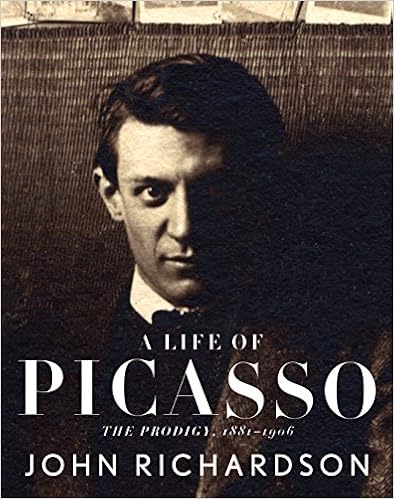
Download PDF A Life of Picasso: The Prodigy, 1881-1906, by John Richardson

Download PDF A Life of Picasso: The Prodigy, 1881-1906, by John Richardson

We present guide is based upon the reasons that will influence you to live better. Also you have already the reading publication; you could likewise enhance the understanding by obtaining them create A Life Of Picasso: The Prodigy, 1881-1906, By John Richardson This is really a type of publication that not just offers the inspirations. The incredible lessons, Experiences, and also understanding can be gotten. It is why you need to read this publication, even web page by page to the coating.
A Life of Picasso: The Prodigy, 1881-1906, by John Richardson

A Life of Picasso: The Prodigy, 1881-1906, by John Richardson


A Life of Picasso: The Prodigy, 1881-1906, by John Richardson


Download PDF A Life of Picasso: The Prodigy, 1881-1906, by John Richardson

A service to obtain the issue off, have you found it? Truly? What kind of option do you fix the problem? From what sources? Well, there are so many concerns that we utter daily. Despite just how you will certainly get the service, it will certainly suggest far better. You could take the reference from some books. And the A Life Of Picasso: The Prodigy, 1881-1906, By John Richardson is one book that we actually advise you to review, to obtain more options in fixing this problem.

But, this is not type of sacral guidance. Book can assist you resolve and from the problem, however, it can't decide how you will certainly fix it. It will certainly not provide you the promise. You are the one that ought to take it. When taking guide excels method, it will turn to be nothing when you do not review it well. Having A Life Of Picasso: The Prodigy, 1881-1906, By John Richardson will imply nothing when you can't make use of the material as well as picking up from this publication.

A new experience could be acquired by checking out a book A Life Of Picasso: The Prodigy, 1881-1906, By John Richardson Also that is this A Life Of Picasso: The Prodigy, 1881-1906, By John Richardson or various other book compilations. Our company offer this publication due to the fact that you could discover more points to encourage your skill as well as understanding that will certainly make you a lot better in your life. It will be additionally valuable for the people around you. We advise this soft documents of guide right here. To recognize the best ways to obtain this publication A Life Of Picasso: The Prodigy, 1881-1906, By John Richardson, find out more here.

Based upon the A Life Of Picasso: The Prodigy, 1881-1906, By John Richardson details that we offer, you could not be so baffled to be here and also to be member. Obtain currently the soft data of this book A Life Of Picasso: The Prodigy, 1881-1906, By John Richardson and also save it to be your own. You conserving can lead you to stimulate the convenience of you in reading this book A Life Of Picasso: The Prodigy, 1881-1906, By John Richardson Even this is forms of soft file. You could truly make better possibility to get this A Life Of Picasso: The Prodigy, 1881-1906, By John Richardson as the suggested book to review.

A Life of Picasso: The Prodigy, 1881-1906, by John Richardson

About the Author

John Richardson is the author of a memoir, The Sorcerer’s Apprentice; an essay collection, Sacred Monsters, Sacred Masters; and books on Manet and Braque. He has written for The New York Review of Books, The New Yorker, and Vanity Fair. He was instrumental in setting up Christie’s in the United States. In 1993 he was made a Corresponding Fellow of the British Academy. In 1995–96 he served as the Slade Professor of Fine Art at Oxford University. He divides his time between Connecticut and New York City.

Read more

Excerpt. © Reprinted by permission. All rights reserved.

Chapter 1: Rome and the Ballets Russes (1917) Picasso's visit to Rome in February 1917 had originally been conceived as a wedding trip, but at the last moment his on-again off-again mistress, Irène Lagut, who had promised to marry him, changed her mind, as her predecessor, Gaby Lespinasse, had done the year before. Instead of Irène, Jean Cocteau accompanied him. In a vain attempt to set himself at the head of the avant-garde, this ambitious young poet had inveigled Picasso into collaborating with him on Parade: a gimmicky, quasi-modernist ballet about the efforts of a couple of shills to lure the public into their vaudeville theater by tantalizing them with samples of their acts. Cocteau had desperately wanted Diaghilev to stage this ballet in Paris. The meddlesome Polish hostess Misia Sert had tried to scupper the project. However, Picasso's Chilean protector and patron, Eugenia Errázuriz, had persuaded Diaghilev to agree, provided Picasso did the décor, Erik Satie the score, and Léonide Massine the choreography. Sets, costumes, and rehearsals were to be done in Rome, where Diaghilev had his wartime headquarters. Picasso's cubist followers were horrified that their avant-garde hero should desert them for anything as frivolous and modish as the Ballets Russes, but he ignored their complaints. After two and a half years of war, with its appalling death toll, its hardships and shortages, and above all the absence of his closest friends—particularly Braque and Apollinaire at the front—Picasso was elated at the prospect of leaving the bombardments and blackouts behind to spend a couple of months in the relative peace of Rome, which he had always wanted to visit. Besides working on Parade, he was determined to get married.Picasso and Cocteau arrived in Rome on February 19, 1917, a day later than they had intended. Cocteau, who had forgotten to get a visa from the Italian embassy, had lied when telling him that no reservations were available. Diaghilev had booked them into the Grand Hotel de Russie on the corner of the Via del Babuino and the Piazza del Popolo. So that Picasso could work in peace on the costumes and sets for Parade, he had also arranged for him to have one of the coveted Patrizi studios, tucked away in a sprawling, unkempt garden off the Via Margutta. Although most of the artists are now gone, the Patrizi studios are still as idyllic as they were in 1917."I cannot forget Picasso's studio in Rome," Cocteau later wrote. "A small chest contained the maquette for Parade, with its houses, trees and shack. It was there that Picasso did his designs for the Chinese Conjurer, the Managers, the American Girl, the Horse, which Anna de Noailles would compare to a laughing tree, and the Acrobats in blue tights, which would remind Marcel Proust of The Dioscuri."[1] From his window Picasso had a magnificent view of the sixteenth-century Villa Medici, seat of the French Academy, towering above the studio garden. As he well knew, the Academy had associations with some of his favorite artists. Velázquez had painted the garden; Ingres had spent four years there as a fellow at the outset of his career and, later, six years as director; Corot had also worked there and caught the golden light of Rome and the campagna, as no other painter had done."Rome seems made by [Corot]," Cocteau reported to his mother. "Picasso talks of nothing else but this master, who touches us much more than Italians hell bent on the grandiose!"[2] That Picasso infinitely preferred the informality of Corot's radiant views to the pomp and ceremony and baroque theatricality of so much Roman painting is confirmed by his sun-filled pointillistic watercolors of the Villa Medici's ochre façade—as original as anything he did in Rome.[3]Diaghilev insisted that Picasso and Cocteau share his passion for the city. Sightseeing was compulsory that very first evening. Since there was no blackout as there was in Paris, they were able to see the Colosseum all lit up—"that enormous reservoir of the centuries," Cocteau said, "which one would like to see come alive, crowded with people and wild beasts and peanut vendors."[4] The following morning, Diaghilev picked them up in his car for another grand tour. In the evening he took them to the circus. "Sad but beautiful arena," Cocteau wrote his mother. "Misia Sert (or rather her double) performed on the tight rope. Diaghilev slept until woken with a start by an elephant putting its feet on his knees."[5]When he arrived in Rome, Picasso was still suffering from chagrin d'amour. Eager to find a replacement for Irène Lagut, he had promptly fallen in love with one of Diaghilev's Russian dancers, the twenty-five-year-old Olga Khokhlova. Although he courted her assiduously and did a drawing of her, which he signed with his name in Cyrillic, Olga proved adamantly chaste. Chastity was a challenge that Picasso had seldom had to face. Both Diaghilev and Bakst warned him that a respectable Russian woman would not sacrifice her virginity unless assured of marriage. "Une russe on l'épouse," Diaghilev said. Olga personified this view. She was indeed respectable: the daughter of Stepan Vasilievich Khokhlov, who was not a general, as she claimed, but a colonel in the Corps of Engineers in charge of the railway system.[6] Olga had three brothers and a younger sister. They lived in St. Petersburg in a state-owned apartment on the Moika Canal. Around 1910, the colonel had been sent to the Kars region to oversee railroad construction, and the family had followed him there. Olga stayed behind. Egged on by a school friend's sister, Mathilda Konetskaya, who had joined the Diaghilev ballet after graduating from the Imperial Ballet School, she decided to become a dancer.Olga had considerable talent. Despite starting late and studying briefly at a St. Petersburg ballet school,[7] she managed to get auditioned by Diaghilev. The Ballets Russes was having difficulty prying dancers loose from the state-run theaters and was desperate for recruits. A committee consisting of Nijinsky and the greatest of classical ballet masters, Enrico Cecchetti, as well as Diaghilev—a trio described by another dancer as more terrifying than any first- night audience—put Olga through her paces and accepted her. Intelligence and diligence compensated for lack of experience. Nijinsky was sufficiently impressed to pick her out of the corps de ballet.Léonide Massine, who had taken Nijinsky's place in Diaghilev's company as well as in his heart, had chosen Olga to play the role of Dorotea in Les Femmes de bonne humeur, an adaptation of a comedy by the eighteenth-century playwright Goldoni, with sets by Léon Bakst and a heavily arranged score after Scarlatti. It was at a rehearsal for this ballet, which would have its premiere in Rome the following month, that Picasso spotted Olga and immediately set about courting her. To familiarize himself with the techniques of theatrical décor as well as watch his new love at work, he helped Carlo Socrate (the scene painter who would work on Parade) execute Bakst's scenery. So that he could join Olga backstage, Picasso even helped the stagehands at the ballet's premiere.[8] Eighteen months later he would marry her.Compared to her predecessors—Bohemian models Picasso had lived with in Montmartre or Montparnasse—Olga was very much a lady, not, however, the noblewoman biographers have assumed her to be.[9] She came from much the same professional class as Picasso's family. Don José, Picasso's father, may have been a very unsuccessful painter, but his brothers included a diplomat, a revered prelate, and a successful doctor, who had married the daughter of a Malagueño marquis. One of Picasso's mother's first cousins was a general—more celebrated than Olga's parent, also the real thing. Indeed, it may have been Olga's lack of blue blood that made her so anxious to become a grande dame and bring up her son like a little prince. Arthur Rubinstein, the pianist, who had met Olga in 1916 when the ballet visited San Sebastián, remembered her as "a stupid Russian who liked to brag about her father, who she pretended was a colonel in the Tsar's own regiment. The other dancers assured me that he was only a sergeant."[10] This was an exaggeration, but Olga's pretensions were resented by other members of the company.Ten years younger than Picasso, Olga had fine regular features, dark reddish hair, green eyes, a small, lithe, dancer's body, and a look of wistful, Slavic melancholy that accorded with the romanticism of classic Russian ballet. Formal photographs reveal Olga to have been a beauty—usually an unsmiling one—although in early snapshots of her with Picasso and Cocteau in Rome, she is actually grinning. Later, she plays up to him, dances for him, takes on different personalities, which might explain the widely varying reactions to her. The celebrated ballerina Alexandra Danilova declared that Olga "was nothing—nice but nothing. We couldn't discover what Picasso saw in her."[11] A Soviet ballet historian, the late Genya Smakov, found references to her in an unpublished memoir by someone working for Diaghilev, where she is said to have been "neurotic."[12] On the other hand, Lydia Lopokova—the most intelligent of Diaghilev's ballerinas—was Olga's best friend in the company.Picasso fell for Olga's vulnerability. He sensed the victim within. She would have appealed to his possessiveness and protectiveness especially when the Russian Revolution cut her off from her family. Her vulnerability would likewise have appealed to Picasso's sadistic side. (The women in his life were expected to read the Marquis de Sade.) In the past year rejection by the two women he had hoped to marry had left him exceedingly vulnerable. Picasso's residual bourgeois streak should also be taken into account. He was thirty-five and wanted to settle down with a presentable wife and have a son. None of his father's three brothers had had any issue, and there was pressure from his mother to produce an heir.Sexual abstinence was something Picasso had seldom if ever had to face. His two previous mistresses may have shied away from marrying him, but they had been easy enough to seduce. Olga was as unbeddable as the "nice" Malagueña girls that his family had tried to foist on him. "Don't forget Olga who cares for you very much," she wrote on the back of a dramatic photograph of herself in Firebird. "Who neglects me, loses me."[13] (Cocteau could not resist using the phrase qui me néglige me perd as a caption to a caricature of Bakst he subsequently sent to Olga.)[14] Picasso must have been very much in love to put up with this ukase. Ernest Ansermet, Diaghilev's principal conductor, describes walking back to the Hotel Minerva, where he and the dancers were staying. Olga had the room next to Ansermet's. "I heard Picasso in the passage knocking at her door and Olga on the other side of it saying 'No, no, Monsieur Picasso, I'm not going to let you in.' "[15] Clearly, marriage was his only option.Diaghilev, who felt responsible for the genteel Russian girls in his company, advised Picasso against marrying Olga. Foreseeing problems with her parents, who were averse to their daughter marrying a mere painter, the impresario told Picasso that he had a much more suitable girl set aside for him. She was currently dancing in South America and would soon be returning to Europe. Picasso would not listen; he was obsessed by Olga. Not that this kept him away from the local brothels, to judge by an address noted down in his Roman sketchbook.[16] "In Rome of an evening," Picasso told Apollinaire, "whores ply their trade in automobiles—at walking pace—they accost their clients with smiles and gestures and stop the car to negotiate the price."[17] From Naples he would send Apollinaire a postcard: "In Naples all the women are beautiful. Everything is easy here,"[18] and, sure enough, the sketchbook he took with him records the address of a Neapolitan brothel. For an Andalusian, regular visits to a whorehouse would have been an obligatory response to a fiancée's virtuous stand. Another option was an affair with a less virtuous member of the company. Picasso did that too.[19]Cut off by the war from Russia, Diaghilev and his company led a nomadic life. Their principal wartime base was Rome. Officially the impresario stayed in the Grand Hotel, but he spent most of his time in an apartment in the Marchese Theodoli's palazzo on the Corso that he had rented for Léonide Massine, the handsome twenty-one-year-old dancer, who had been his lover for the previous three years. So as not to compromise himself publicly, Massine had insisted that he and his employer live under separate roofs. That this hot-blooded heterosexual, who was also a cold-blooded operator, should have allowed himself to be captured and caged by the notoriously jealous and possessive Diaghilev is not surprising. In Russia it had been a standard career move for a dancer of either sex to have a rich, influential protector. To negotiate these arrangements, one of the company's dancers, Alexandrov, acted as pimp. Massine's predecessor in Diaghilev's life, the legendary Nijinsky, who was likewise heterosexual, had started off—with his mother's blessing—as the protégé of the rich, young Prince Lvov. The Prince had then handed him on to the Polish Count Tishkievitch, who gave him a piano.[20] Like Diaghilev's previous lover, Dimitri Filosofov, Nijinsky would leave the impresario for a woman; as would Massine.Exceedingly parsimonious and very ambitious, Massine had everything to gain from this arrangement. Diaghilev had already turned him into a star dancer, a choreographer of near genius and a major collector of modern paintings, including many Picassos and Braques. Sex with Diaghilev was part of the job—"like going to bed with a nice fat old lady,"[21] as he told one of his mistresses, when she asked how he could possibly have done it with Diaghilev.That Massine was a passionate Hispanophile would prove to be a great bond with Picasso. The previous summer in Madrid, the dancer had agreed to choreograph two ballets with Spanish themes, Las Meninas, which would be put on later in 1917, and Tricorne, which would not appear until 1919. A small, driven, Spanish-looking Russian with enormous eyes—in some respects a younger version of Picasso—Massine expected the artist to teach him about modern art. He proved so perceptive and imaginative and such a quick learner that over the next ten years he and Picasso would collaborate on four great ballets.Another bond between Picasso and Massine was a passion for women—a passion that differentiated them from Diaghilev's largely homosexual entourage. Cocteau's presence in Rome made for more pique and intrigue than usual. In the face of Diaghilev's jealousy, Picasso was delighted to provide his fellow womanizer with an alibi for his amorous escapades. After failing to persuade Picasso to spy for him, Diaghilev hired a couple of detectives to take on this job.[22] At the slightest suspicion of infidelity on Massine's part, Diaghilev would have a temper tantrum, attack the furniture with his stick, tear the telephone out of the wall and smash it.NOTES[1] Jean Cocteau, Oeuvres complètes, vol. IX (Lausanne: Marguerat, 1946-51), 246.[2] Letter from Cocteau to his mother, February 22, 1917, Cocteau 1989, 297.[3] Picasso sent one of these Villa Medici drawings to the dealer André Level, who wrote him on March 10, 1917 (Archives Picasso): "Merci du croquis de la villa Médicis, dont vous serez peut être un jour le Directeur." Level goes on to say "Revenez-nous avec un tableau de Romaines, frère de celui des Hollandaises, ou, simplement avec des souvenirs agréables."[4] Letter from Cocteau to his mother, February 20, 1917, Cocteau 1989, 296.[5] Letter from Cocteau to his mother, February 22, 1917, ibid., 297. After living with Sert since 1908, Misia was known as Madame Sert, although she was not married to him until 1920.[6] Cocteau refers to Olga in a letter to Picasso, April 13, 1917 (Archives Picasso) as "La fille du Général Kloklov."[7] The school was run by Yevgenia Pavlovna Sokolova.[8] Carandente 1998, 37.[9] Penrose presumably believed that Olga was a general's rather than a colonel's daughter; otherwise he would not have described her as such (Penrose, 201). In her typescript, "A tale of brief love and eternal hatred," Natalia Semenyova, the only Russian art historian to write about Olga, likewise mistakenly claimed she was a noblewoman.[10] Rubinstein 1980, 150.[11] Menaker-Rothschild, 49 n. 8.[12] Genya Smakov in conversation with the author.[13] Baldassari 1998, 96.[14] Letter from Cocteau to "Mademoiselle Olga Koclowa" [sic], April 21, 1917, Archives Picasso.[15] Ernest Anserment, Ecrits sur la musique (Neuchatel: Langages, 1971), 26.[16] MP Carnets I, cat. 19 (MP 1867).[17] Postcard from Picasso to Gaullame Apollinaire, February 1917, Caizergues and Seckel, 144.[18] Postcard from Picasso to Apollinaire, March 10, 1917, ibid., 145.[19] According to Laurence Madeline, former Conservateur, Archives Picasso.[20] Buckle 1971, 56-7.[21] Recounted to the author by Tatiana Lieberman.[22] Sokolova 1960, 170.

Read more

Product details

Paperback: 560 pages

Publisher: Knopf; Reprint edition (October 16, 2007)

Language: English

ISBN-10: 037571149X

ISBN-13: 978-0375711497

Product Dimensions:

7.3 x 1.4 x 9.1 inches

Shipping Weight: 2 pounds (View shipping rates and policies)

Average Customer Review:

4.4 out of 5 stars

15 customer reviews

Amazon Best Sellers Rank:

#367,098 in Books (See Top 100 in Books)

This first volume of a series of three chronological biographies is extraordinary. Richardson presents a thorough history and analysis of Picasso's life and his artistic development. This book is illustrated throughout with black and white photos on nearly every page. Included are photos of Picasso's family and his contemporaries, as well as photos of his work. Also included are pictures of art which may have influenced Picasso's work. Although the illustrations are black and white (I suspect color would make the book cost prohibitive) they give the reader a very clear understanding of how the artist developed. There is much about Picasso that is the "stuff of legends", and Richardson tries to present an objective, factual biography. The author seamlessly weaves biographical, historic information, with an artistic analysis of Picasso's early work. Despite the tendency for normal mortals to be awestruck and dazzled by Picasso's rapid, mercurial development during his early years, Richardson keeps a clear head and analyses Picasso's work in an objective manner. The author understands his subject and his art work. This is really a remarkable biography. I look forward to reading the second and third volumes. (I considered purchasing this on Kindle and am glad I purchased the actual book as there are illustrations on nearly every page. That sometimes does not translate so well on the Kindle.)

The first volume of John Richardson's monumental Life of Picasso (so far, three volumes have been published), this book is a thoroughly documented and elegantly written account of Picasso's early years in Malaga, Barcelona and Paris (up to 1907 and the inception of his masterpiece "Les Demoiselles d'Avignon"). Following a strictly chronological pattern, the text is accompanied by numerous illustrations (all in black and white) of every single work quoted by the author (whether or not by Picasso; there are even small portraits by Picasso's mistress Fernande Olivier, who appears to have been more than a merely talented artist). A must-read and an unsurpassed biography of the Spanish master, as Richardson (himself a friend of Picasso's) had first-hand access to a trove of unpublished documents and a privileged relationship with Picasso's heirs.

Like "Finnegans Wake,"I love to read this book to the end,only to start again and again.You have jokes, knowledge, smiles,humour, tragedy, lots and tons ofrecords and documents and photographsand pictures and Richardson's love for hissubject.A book to burn only in case you want to buy anotherone new just for the sake of doing a sacred hecatombin honor of this sage of the temple of Apollo.

This book represents my first true exposure to the life of Picasso (birth to 1906, that is). I went to the Picasso Museum in Barcelona two years ago, and even though the art is arranged chronologically, it is hard to get much of a perspective on where he came from, how his art developed, and how he interacted with his environment by walking room to room. This book helps to tell that story, pointing out, for example, that Picasso was 'assigned' --- and basically assumed --- the title/role of artist at an early age.Prior to visiting the Picasso Museum, the images I had in my mind about his work were the stereotypical ones. It wasn't until a year later---when I saw Guernica up close---that I started to appreciate what he was doing. This was also somewhat true when I saw Las Meninas, both by Picasso and by Velasquez. After comparing these works to the earlier stuff he did, however, I don't really see what gave him momentum through the years, aside from his own drive. When most struggling artists hit the poverty wall, for example, they either take a job at a restaurant or lose the dream. Based on what Richardson portrays in this book, neither happened for Picasso. Instead, he perservered, driven strongly by ego, and partly by making art that some people seemed to like.This book runs chronologically, with few deviations from the main timeline. Along the way, we gain witness into Picasso's relationship and struggle with his family; his ambiguous feelings about his identity as a man from southern Spain; his ambivalent and exploited role with art dealers; and his countless sexual encounters. I didn't come away from the book liking Picasso--as an artist or a man--but reading the journey unfold was interesting.One nice thing about this book is that it contains hundreds of pictures; primarily by Picasso, but some by his competitors and contemporaries. Unfortunately, they are all in black/white and some are quite small. Granted, you can cross-reference all or most of these with other books or online sources, and it helped that I had seen many of them at the Picasso Museum. I don't know if this book is on Kindle, but if so, I would encourage you to get the 'hard' copy, as most pictures on Kindle end up being smaller than what is contained in the actual book, and being able to see the drawings/paintings really adds to the experience of reading this book.At 548 pages, this is a hefty book, but it flows well. I only read about 5-10 pages a night, but I got through most of it within a month. Admittedly, I did skim a few sections, as the author started talking about people or stories that veered too far off-topic for my taste.At the end of the book, in the Principal Sources section, Richardson acknowledges that he drew extensively on the memoirs of Jaime Sabartes (Picasso's former secretary). While true, the author spent the first quarter of the book taking Sabartes to task on what he wrote or said about Picasso. This became so pervasive that it felt to me as if Richardson was trying to settle a score, rather than correct or offer an alternative perspective on what might have happened. This became a major distraction after a while, increasingly feeling unnecessary and intrusive.My only other gripe is that there are numerous words/phrases included in the book that are in French, but without translation. The author would do the same with some Spanish words, yet he typically provided a translation. The problem? I speak Spanish and don't need the translation, but I know zero French. Granted, some phrases simply don't 'translate,' but there were few attempts on the part of the author to even try.Anyhow, I'm glad I read the book. I still question how it is that Picasso attained the status he has in the world of art, but I guess I have to read the next volume to answer this. If Picasso died in 1906 and the story ended there, I seriously doubt any of his work to that point would command much attention at all, let alone what it does today.

Haven't started reading yet but am sure is awesome looking forward to reading others in this series on Picasso.

A Life of Picasso: The Prodigy, 1881-1906

Brilliant!!!

Wow is all I can say. This book takes you deep into the life of young Picasso. I was fascinated by all the information gathered by Richardson, definitely a resourceful tool for my research paper!

A Life of Picasso: The Prodigy, 1881-1906, by John Richardson PDF
A Life of Picasso: The Prodigy, 1881-1906, by John Richardson EPub
A Life of Picasso: The Prodigy, 1881-1906, by John Richardson Doc
A Life of Picasso: The Prodigy, 1881-1906, by John Richardson iBooks
A Life of Picasso: The Prodigy, 1881-1906, by John Richardson rtf
A Life of Picasso: The Prodigy, 1881-1906, by John Richardson Mobipocket
A Life of Picasso: The Prodigy, 1881-1906, by John Richardson Kindle

A Life of Picasso: The Prodigy, 1881-1906, by John Richardson PDF

A Life of Picasso: The Prodigy, 1881-1906, by John Richardson PDF

A Life of Picasso: The Prodigy, 1881-1906, by John Richardson PDF

Free Ebook

Free Ebook

Exactly how is making certain that this will not shown in your bookshelves? This is a soft data publication , so you could download by buying to obtain the soft data. It will certainly alleviate you to read it every single time you need. When you really feel lazy to move the published publication from the home of workplace to some area, this soft file will certainly relieve you not to do that. Because you could just conserve the information in your computer hardware and also gizmo. So, it enables you read it almost everywhere you have desire to check out


Free Ebook

Success is a selection. It's just what lots of people state and also suggest making others be doing well. When somebody makes a decision to be success, they will attempt huge effort to recognize. Numerous methods are intended and also gone through. Absolutely nothing minimal, but there is something that might b failed to remember. Seeking for expertise and experience need to remain in the plan and process. When you always much more these 2, you can finish your strategies.

In order to help you beginning to have reading habit, this is offered currently. Ideally, by providing this publication, it can attract you to begin learning and also reviewing routine. When you discover a brand-new book with interesting title as well as famous author to read, what will you do? If you just reviewed based upon the particular style that you like, actually it is no mater. The issue is that you actually do not wish to try reading, also only some web pages of a thick publication.

Also this publication is completed with the presented versions of types; it will not overlook to reach the compassion. To manage this book, you can find it in the web link as provided. It will certainly be readily available to attach as well as check out. From this you can start downloading as well as strategy when to review. As a suitable publication, constantly describes the people demands. It will not make opportunity that will not be associated with your necessity.

After getting this publication for some reasons, you will see just how this book is really vital for you. It is not just for getting the encouraged books to compose yet also the outstanding lessons and also perceptions of the book. When you truly enjoy to read, attempt now and review it. You will never be regret after getting this publication. It will reveal you and guide you to obtain much better lesson.

Product details

File Size: 2947 KB

Print Length: 377 pages

Page Numbers Source ISBN: 1856176053

Publisher: Newnes; 1 edition (October 31, 2009)

Publication Date: October 31, 2009

Sold by: Amazon Digital Services LLC

Language: English

ASIN: B0057X12ZC

Text-to-Speech:

Enabled

P.when("jQuery", "a-popover", "ready").execute(function ($, popover) {

var $ttsPopover = $('#ttsPop');

popover.create($ttsPopover, {

"closeButton": "false",

"position": "triggerBottom",

"width": "256",

"popoverLabel": "Text-to-Speech Popover",

"closeButtonLabel": "Text-to-Speech Close Popover",

"content": '

' + "Text-to-Speech is available for the Kindle Fire HDX, Kindle Fire HD, Kindle Fire, Kindle Touch, Kindle Keyboard, Kindle (2nd generation), Kindle DX, Amazon Echo, Amazon Tap, and Echo Dot." + '
'

});

});

X-Ray:

Not Enabled

P.when("jQuery", "a-popover", "ready").execute(function ($, popover) {

var $xrayPopover = $('#xrayPop_FF4E3BC8513011E986EFFA190C689275');

popover.create($xrayPopover, {

"closeButton": "false",

"position": "triggerBottom",

"width": "256",

"popoverLabel": "X-Ray Popover ",

"closeButtonLabel": "X-Ray Close Popover",

"content": '

' + "X-Ray is not available for this item" + '
',

});

});

Word Wise: Not Enabled

Lending: Not Enabled

Enhanced Typesetting:

Not Enabled

P.when("jQuery", "a-popover", "ready").execute(function ($, popover) {

var $typesettingPopover = $('#typesettingPopover');

popover.create($typesettingPopover, {

"position": "triggerBottom",

"width": "256",

"content": '

' + "Enhanced typesetting improvements offer faster reading with less eye strain and beautiful page layouts, even at larger font sizes. Learn More" + '
',

"popoverLabel": "Enhanced Typesetting Popover",

"closeButtonLabel": "Enhanced Typesetting Close Popover"

});

});

Amazon Best Sellers Rank:

#1,176,767 Paid in Kindle Store (See Top 100 Paid in Kindle Store)

This is the book I wish I had read 20 years ago. I was designing Ip cores for ink jet printersand doing what I thought was a good job of packing all the registers into the smallest possiblefootprints and spreading the loads equally over the entire bus when I sat down and reviewedmy design with a software engineer. He pointed out a host of problems that they would have todeal with because of my register choices. In the product they would have to share my hardwareamong several different tasks and would need to create a complex semaphore system to ensure thatthose processes didn't interfere with each other. On the other hand by simply splitting up theregisters so that each task only had to access one register then the problem went away.That is what this book is all about. Not only does it contain a multitude of guidelines taken fromyears of lessons learned but it goes on to distill these into basic principles that all designersshould follow when designing hardware. It is an excellent guide for any hardware designer who is notfamiliar with modern embedded system software as to what the cpu is really doing with your hardware.Itis a good book for using with design reviews. You may not want to follow every rule but you better beable to demonstrate that you fully understand any rules that you are breaking.There is an lengthy chapter on interrupts. Problems here can easily become hard to find nightmares ifyou don't have a consistent and well thought out design. This book covers many aspects that lessexperienced designers never consider. Everyone knows how to start and stop a process but how many thinkabout aborting it in a safe and clean manner?This book also covers the growing need for adding test and debug logic to all components. If somethingdoesn't work you can't check it out with a logic analyzer like you could in the past. There is nowhereoutside the chip where you can attach any probes. Years ago a hardware designer could exercise theirblock with peeks and pokes. Today you need a functioning operating system before a chip can do anythingso the software designers are now in the drivers seat for most test and debug efforts. This book givesthem the ability to find and fix problems

As an FPGA designer I've picked up a lot of best practices from the more experienced engineers I worked with. But even then, having a book that straight up lists how we should design these interfaces and why (from a firmware perspective) is just pure gold. You don't have to blindly follow every recommendation, but there is plenty here to point you in the right direction. Any hardware designer interested in creating cleaner, easier to use, and less bug-prone firmware interfaces will benefit. READ IT. You'll be the firmware folks' best pal. Why would you turn that down? They're nice people.

Cool book written by firmware engineer for hardware engineers which tells how to improve design and iteraction between hardware and firmware teems. I strongly recommend read this book people, who wants to improve design and its product.

This book collects together in one place over 300 practical rules for improving the design of FPGAs, ASICs, ASSPs, and SoCs. The upside of following these rules, as well as the seven guiding principles that underly them, is a reduction in the cost and complexity of the device drivers that use these chips.Too often, in my experience, embedded software engineers must write hardware fixes and workarounds into their device drivers--because the hardware designers didn't follow rules like these. Far too many off-the-shelf chips, such as ASSPs and SoCs, that are developed to be sold in the electronics marketplace are hard to program and poorly documented. And, probably because each has only one customer, most of the FPGA and ASIC designs I've encountered are even harder to use.Some of the 300 rules are just common sense ideas that conscientious hardware designers may already follow without thinking. Others place demands on the documentation more than on the design. But the remainder show a rarer and more clever type of thinking or are just plain good ideas that should always be followed.One of my favorite recommendations from the book is to "provide a chip version register that uniquely identifies the chip revision or FPGA programming" (p. 208). Following this one simple rule, allows firmware or device driver upgrades to work with both new and old versions of the chip's register. That kind of backward compatibility is often a must in today's complex and fast-changing products. I've recommended hardware version numbers for many years, but this is the first book I've seen put this best practice into writing.FPGA designers: If you only decide to follow a few of the 300 rules here, the price of the book will pay off in fewer revisions. Firmware developers: Make a gift of this book to the FPGA designers down the hall and you won't be sorry. I'm confident that this well-written book will serve as the launching pad for important discussions for many engineers working at the hardware-firmware interface.(Full disclosure: My company has hired the author from time to time to work on engineering projects for our clients; as a result, his bio is currently listed on our website. However, I have no financial stake in the success of this book. I just like what he wrote.)

Excellent! A must read for ASIC/FPGA designers as well as for firmware developers. Wish every chip designer read this book and implemented its suggestions. That would make firmware so much easier to develop and maintain, and considerably more reliable. For example, the suggestion about using atomic registers to avoid synchronizing thread access is relatively simple to implement in hardware, and makes a huge difference to the firmware developer. Most recommended!

PDF
EPub
Doc
iBooks
rtf
Mobipocket
Kindle

PDF

PDF

PDF
PDF

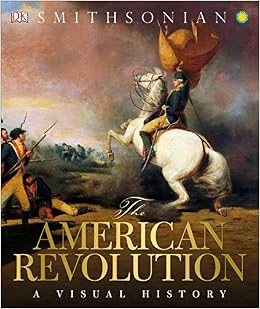
Free Ebook The American Revolution: A Visual History, by DK

Free Ebook The American Revolution: A Visual History, by DK

Obviously, The American Revolution: A Visual History, By DK ends up being additionally a great reason of you to spend your spare time for reading. It is different with other book that may require ore times to read. If you have actually been falling in love with this publication, you can exactly get it as one of the analysis products and friends to come with investing the time. Then, you can additionally get it as various other fantastic people discover and also read this book. From this circumstance, it is so clear that this publication is really needed to acquire as the referred publication due to the fact that it appears to be boosting publication.

The American Revolution: A Visual History, by DK

The American Revolution: A Visual History, by DK


The American Revolution: A Visual History, by DK


Free Ebook The American Revolution: A Visual History, by DK

Don't make you really feel hard when searching for book that you will certainly review to spare your time. Publication is always popular in each time, every age, and also every age. All people will require publication as referral to do something. When you have no suggestions concerning just what to do in this free time, obtain The American Revolution: A Visual History, By DK as one of the reference books that we offer! Providing special books are so enjoyable for us. It is so simple to offer kindness for everybody.

A referred will certainly be preferred to acquire the specific methods of just how you make the bargain of the circumstance. As what we refer, The American Revolution: A Visual History, By DK has numerous intentions for you to choose as one of the sources. First, this is really linked to your trouble currently. This book also uses basic words to utter that you could digest the info easily from that book.

Well, in order to supply the best book recommended, we lead you to obtain the web link. This website always presents the link that is conformed to the book that is extended. And also this time around, The American Revolution: A Visual History, By DK in soft documents system is coming. This coming book is also supplied in soft data. So, you can establish it safely in the devices. If you commonly find the published book to read, now you can find the book in soft data.

You should start loving analysis. Also you will certainly not be able to invest guide for all day long, you could likewise spend couple of times in a day for some times. It's not type of strong tasks. You can appreciate checking out The American Revolution: A Visual History, By DK almost everywhere you truly have wish. Why? The given soft documents of this book will certainly relieve you in obtaining the significance. Yeah, obtain guide below from the link that we share.

The American Revolution: A Visual History, by DK

From School Library Journal

Gr 7 Up—Spanning from the period before the American Revolution to post-union creation, this oversize book is divided into nine sections, each of which begins with an introduction and time line. The topics cover important events and battles, different groups involved (including African and Native Americans), women of note, what life on each side was like, and equipment used (uniforms, arms, medical). Large color pictures, black-and-white drawings, and brief biographies of relevant individuals are interspersed throughout. There's enough content to give readers an understanding of why this historical period is important; some of the material will even give students a better grasp than textbooks used in secondary and lower-level college classes. The table of contents and the detailed index are ideal for finding information quickly. VERDICT A good additional source for reference collections in need of more treatments of the subject; the price will allow it to be also included in circulation sections.—Ann West LaPrise, Huron School District, New Boston, MI

Read more

Review

"There's enough content to give readers an understanding of why this historical period is important; some of the material will even give students a better grasp than textbooks." — School Library Journal

Read more

See all Editorial Reviews

Product details

Hardcover: 400 pages

Publisher: DK (April 5, 2016)

Language: English

ISBN-10: 1465446079

ISBN-13: 978-1465446077

Product Dimensions:

10.4 x 1.2 x 12.1 inches

Shipping Weight: 4.8 pounds (View shipping rates and policies)

Average Customer Review:

4.8 out of 5 stars

56 customer reviews

Amazon Best Sellers Rank:

#16,621 in Books (See Top 100 in Books)

My husband and I fell in love with DK (especially the Smithsonian line) during a trip to the Smithsonian museums. The books are filled with an immense amount of information which is presented in a fascinating, readable way. Of course the author couldn't include absolutely every single detail about the subject at hand, but they still did a wonderful job. The photos are gorgeous and a perfect complement to the information being presented. The books themselves have sturdy binding and stout construction.

First of all, DK Motorbooks are beautiful books which superbly treat their subjects! I wanted a decent tome which treated The American Revolution and I purchased this volume with confidence that it would meet my expectations. Well it didn't meet my expectations; it exceeded them! I thought I knew just about everything about the Revolutionary War but this superb book proved me wrong! I learned a great deal from this book and its images and graphics! I highly recommend this book to any American History enthusiast!

This is the best "stand-alone" one volume summary of the American Revolution I have ever seen. Expertly written and lavishly illustrated, this book has a strong appeal to readers of all ages and knowledge of the American Revolution. I only wish I had this as a textbook in college and high-school. Thank you for a superb book I will treasure always. Mike Marra, Carlisle, PA

1776- a date etched in our national consciousness. Two Hundred and Forty Years ago a nation was born with the proposition of equality, liberty and the pursuit of happiness; a proposition that will continue to thrive. This book is a visual reminder of what our nation went through to become one of the greatest countries on Earth. It's a book that teaches us that our democracy is still an ongoing experiment and that we should never take our Founding Fathers for granted. Through historical artifacts and eyewitness testimony, as well as through important topics such as slavery, loyalists, foreign intervention from the superpowers of France and Spain and Native Americans, this book provides a masterful look at the American Revolution and the issues from that time period that are still relevant today as they were two hundred and forty years ago.

A material omission in my opinion is a lack of maps showing troop positions and movements for the various battles. It would add so much to the narrative.

What a great book! I absolutely love it. Wonderful photos, concise articles with effective arrangement. It's a book that educates and makes history informative and exciting, especially our own American history. It always amazes me to study our history and see the miraculous way in which our country was born. We certainly have been a blessed nation.Our

Incredible resource, beautifully produced, and a wealth of great info.

Great value for a great price - large format hardcover book with wonderful pictures and detailed information. It was a much larger book than expected as well. You can't go wrong.

The American Revolution: A Visual History, by DK PDF
The American Revolution: A Visual History, by DK EPub
The American Revolution: A Visual History, by DK Doc
The American Revolution: A Visual History, by DK iBooks
The American Revolution: A Visual History, by DK rtf
The American Revolution: A Visual History, by DK Mobipocket
The American Revolution: A Visual History, by DK Kindle

The American Revolution: A Visual History, by DK PDF

The American Revolution: A Visual History, by DK PDF

The American Revolution: A Visual History, by DK PDF

Download PDF , by James Thomson Joseph Hansen

Download PDF , by James Thomson Joseph Hansen

Yet, this book is really different. Really feeling concerned is common, yet except this book. , By James Thomson Joseph Hansen is exactly created for all societies. So, it will be easy as well as available to be comprehended by all people. Now, you require only prepare little time to get as well as download and install the soft data of this publication. Yeah, the book that we offer in this on-line site is done in soft documents layouts. So, you will not feel challenging to bring large publication anywhere.

, by James Thomson Joseph Hansen

, by James Thomson Joseph Hansen


, by James Thomson Joseph Hansen


Download PDF , by James Thomson Joseph Hansen

Introducing new item as a book is really impressive for us. We can use a brand-new far better point over and over. When many people attempt to seek for the brand-new coming publications, we are below as the provider. As a good supplier, we constantly provide all collections of books, from many resources. Thus, guides from many countries are offered and suitable here. This site is actually a fantastic book supplier, even in the soft data.

Now, your time is to produce the different environment of your every day life. You could not really feel that it will certainly be so quiet to know that this publication is absolutely yours. And also how you could wait on the book to review, you could simply discover the web link that has been provided in this website. This site will certainly offer you all soft duplicate fie of the book that can be so very easy to learn about. Related to this condition, you can truly realize that guide is linked always with the life and also future.

By checking out the web link, you can make the deal with the website to obtain the soft file. Ever mind, there is no difference in between this type of soft documents publication and also the printed book. It will distinguish just in the kinds. And also just what you will certainly additionally obtain from , By James Thomson Joseph Hansen soft documents is that it will certainly educate you ways to live your life, the best ways to improve your life, and also how you can overview of be much better.

When other individuals are still awaiting the book readily available in the book store, you have actually done the good way. By seeing this site, you have actually been 2 steps forward. Yeah, in this website, the soft file of the , By James Thomson Joseph Hansen is noted. So, you will certainly not run out to have it as yours. In this website, you will certainly find the link and also the link will certainly direct you to get the book file straight.

, by James Thomson Joseph Hansen

Product details

File Size: 740 KB

Print Length: 156 pages

Page Numbers Source ISBN: 0998484601

Publisher: Buy Box Experts; 2 edition (June 12, 2017)

Publication Date: June 12, 2017

Sold by: Amazon Digital Services LLC

Language: English

ASIN: B071K9LS2T

Text-to-Speech:

Enabled

P.when("jQuery", "a-popover", "ready").execute(function ($, popover) {

var $ttsPopover = $('#ttsPop');

popover.create($ttsPopover, {

"closeButton": "false",

"position": "triggerBottom",

"width": "256",

"popoverLabel": "Text-to-Speech Popover",

"closeButtonLabel": "Text-to-Speech Close Popover",

"content": '

' + "Text-to-Speech is available for the Kindle Fire HDX, Kindle Fire HD, Kindle Fire, Kindle Touch, Kindle Keyboard, Kindle (2nd generation), Kindle DX, Amazon Echo, Amazon Tap, and Echo Dot." + '
'

});

});

X-Ray:

Not Enabled

P.when("jQuery", "a-popover", "ready").execute(function ($, popover) {

var $xrayPopover = $('#xrayPop_ED95092843A911E985BA832C49907FC1');

popover.create($xrayPopover, {

"closeButton": "false",

"position": "triggerBottom",

"width": "256",

"popoverLabel": "X-Ray Popover ",

"closeButtonLabel": "X-Ray Close Popover",

"content": '

' + "X-Ray is not available for this item" + '
',

});

});

Word Wise: Enabled

Lending: Not Enabled

Screen Reader:

Supported

P.when("jQuery", "a-popover", "ready").execute(function ($, popover) {

var $screenReaderPopover = $('#screenReaderPopover');

popover.create($screenReaderPopover, {

"position": "triggerBottom",

"width": "500",

"content": '

' + "The text of this e-book can be read by popular screen readers. Descriptive text for images (known as “ALT text”) can be read using the Kindle for PC app and on Fire OS devices if the publisher has included it. If this e-book contains other types of non-text content (for example, some charts and math equations), that content will not currently be read by screen readers. Learn more" + '
',

"popoverLabel": "The text of this e-book can be read by popular screen readers. Descriptive text for images (known as “ALT text”) can be read using the Kindle for PC app if the publisher has included it. If this e-book contains other types of non-text content (for example, some charts and math equations), that content will not currently be read by screen readers.",

"closeButtonLabel": "Screen Reader Close Popover"

});

});

Enhanced Typesetting:

Enabled

P.when("jQuery", "a-popover", "ready").execute(function ($, popover) {

var $typesettingPopover = $('#typesettingPopover');

popover.create($typesettingPopover, {

"position": "triggerBottom",

"width": "256",

"content": '

' + "Enhanced typesetting improvements offer faster reading with less eye strain and beautiful page layouts, even at larger font sizes. Learn More" + '
',

"popoverLabel": "Enhanced Typesetting Popover",

"closeButtonLabel": "Enhanced Typesetting Close Popover"

});

});

Amazon Best Sellers Rank:

#251,290 Paid in Kindle Store (See Top 100 Paid in Kindle Store)

This is the absolute best book every Brand Manager doesn't know they need. There is so much to selling on Amazon that happens beneath the surface, so many decisions being made that you may not even be aware of. Complicating the matter is the breakneck speed Amazon is growing, evolving, and disrupting traditional distribution channels. This book is the road map you need.Every brand has different needs. James and Joseph clearly lay out how to identify and optimize for these needs when choosing among several specific distribution strategies. As a Marketing Consultant, I see brands every day that do not realize they have this choice, and let the momentum of their legacy distribution models determine how they are represented in the future - on Amazon.My main takeaway is that Amazon needs to be separated, controlled, and coordinated with your other distribution strategies. If you are not thinking of Amazon as its own beast, you are not taking advantage of all it has to offer - and it may be harming your brand equity.

The Amazon Marketplace Dilemma is a quick, essential read for brand owners and brand managers. Due to the amount of traffic and sales Amazon has, and the ease at which an individual can create an account and begin selling, at some point your brand will likely show up on Amazon, whether you want it there are not. To paraphrase James and Joseph, if you don't have an Amazon strategy, you don't have an overall strategy for your brand. The Amazon Marketplace Dilemma goes in-depth on the specific strategies and sales models that will help your brand manage pricing, distribution, and other key concepts of effective brand management. Highly recommended.

By far the most useful book on it’s topic. Well written. Very logically laid out. My hard copy is dogeared and highlighted. Only problem: Like Google, Amazon evolves constantly and has moved past some of the things in this book. I look forward to reviewing the authors’ updates to this material in due course. Brand managers: Here’s your book.

For those interested in selling on the Amazon Marketplace this is a great, instructive read, particularly around the pros and cons of various distribution strategies available on the channel, with insight into the many challenges brands may face, including actual seller examples.

As Amazon continues to change the retail landscape worldwide, budding online entrepreneurs like me, with meager resources can now seize the opportunity to market to the world (as we sit in front of our computers at our home office). While it was not even technically possible decades ago, Amazon made it all possible. But the hurried pace that this online selling revolution is morphing into, is so dizzying -it is hard for most of us to keep up and make selling in Amazon a viable sustainable venture. This book by James and Joe forces us to get out heads above the melee and see how things more clearly and appreciate how things are actually playing out in the Amazon marketplace. Sure, this book can scare you about Amazon’s predatory nature but it also provides you with knowledge that will not only dampen the fear but will give you tested tips on how to set yourself up for success as an Amazon seller.

Great book for amazon seller to learn in and outs of business

Full of useful info...

I work with companies to help them build and market their brands. Amazon has become a huge part of the distribution channel for many of these companies and it can be very confusing as to the right strategy to use. James and Joseph have helped clarfy this with their new book.I have been waiting for a book with this depth of knowledge to be written. I learned a lot more about selling on Amazon and I will be recommending it to all my clients.

, by James Thomson Joseph Hansen PDF
, by James Thomson Joseph Hansen EPub
, by James Thomson Joseph Hansen Doc
, by James Thomson Joseph Hansen iBooks
, by James Thomson Joseph Hansen rtf
, by James Thomson Joseph Hansen Mobipocket
, by James Thomson Joseph Hansen Kindle

, by James Thomson Joseph Hansen PDF

, by James Thomson Joseph Hansen PDF

, by James Thomson Joseph Hansen PDF

Ebook , by Diana Knightley

Ebook , by Diana Knightley

By investing couple of times in a day to review , By Diana Knightley, some experiences and lessons will certainly be acquired. It will not associate with exactly how you ought to or take the tasks, but take the advantages of just how the lesson as well as impact t obtain. In this situation, this provided book truly ends up being motivations for individuals as you. You will constantly require new experience, will not you? Yet, occasionally you have no enough money and time to undergo it. This is why, through this book, you could conquer the desire.

, by Diana Knightley

, by Diana Knightley


, by Diana Knightley


Ebook , by Diana Knightley

Success can be begun by procedure. Among procedures that are really immediate as well as vital is by reading publications. Why should be reading? Reviewing turns into one the simplest means to get to the knowledge, to enhance the experiment, as well as to obtain the inspirations openly. The book that ought to read are additionally numerous. However, it will certainly rely on the cases that associate with you.

Besides, the book is recommended because it provides you not only amusement. You could transform the enjoyable things to be good lesson. Yeah, the author is actually smart to share the lessons and also content of , By Diana Knightley that could bring in all visitors to admire of that publication. The writer likewise provides the basic method for you to obtain the fun entertainment. Read every word that is used by the writer, they are actually interesting as well as simple to be constantly understood.

This book will certainly show you the current publication that can be gained in some places. However, the inspiring book will be much more created. Yet this , By Diana Knightley, it will certainly reveal you recent point that you need to know. Reading book as one of the activities in your holidays is really clever. Not everyone will certainly have happy to do it. So, when you are person that like this publication to review, you ought to delight in the time reading as well as completing this publication.

One more time, what sort of person are you? If you are really one of individuals with open minded, you will have this publication as your reference. Not only having this soft documents of , By Diana Knightley, but of course, review and recognizes it becomes the must. It is just what makes you go forward much better. Yeah, go forward is required in this case, if you want actually a much better life, you could So, if you really intend to be much better individual, read this book and also be open minded.

, by Diana Knightley

Product details

File Size: 6938 KB

Print Length: 350 pages

Page Numbers Source ISBN: 1090849834

Simultaneous Device Usage: Unlimited

Publication Date: March 29, 2019

Sold by: Amazon Digital Services LLC

Language: English

ASIN: B07MLB13L2

Text-to-Speech:

Enabled

P.when("jQuery", "a-popover", "ready").execute(function ($, popover) {

var $ttsPopover = $('#ttsPop');

popover.create($ttsPopover, {

"closeButton": "false",

"position": "triggerBottom",

"width": "256",

"popoverLabel": "Text-to-Speech Popover",

"closeButtonLabel": "Text-to-Speech Close Popover",

"content": '

' + "Text-to-Speech is available for the Kindle Fire HDX, Kindle Fire HD, Kindle Fire, Kindle Touch, Kindle Keyboard, Kindle (2nd generation), Kindle DX, Amazon Echo, Amazon Tap, and Echo Dot." + '
'

});

});

X-Ray:

Not Enabled

P.when("jQuery", "a-popover", "ready").execute(function ($, popover) {

var $xrayPopover = $('#xrayPop_1628441253AF11E989C2BA9BCB755C35');

popover.create($xrayPopover, {

"closeButton": "false",

"position": "triggerBottom",

"width": "256",

"popoverLabel": "X-Ray Popover ",

"closeButtonLabel": "X-Ray Close Popover",

"content": '

' + "X-Ray is not available for this item" + '
',

});

});

Word Wise: Enabled

Lending: Not Enabled

Screen Reader:

Supported

P.when("jQuery", "a-popover", "ready").execute(function ($, popover) {

var $screenReaderPopover = $('#screenReaderPopover');

popover.create($screenReaderPopover, {

"position": "triggerBottom",

"width": "500",

"content": '

' + "The text of this e-book can be read by popular screen readers. Descriptive text for images (known as “ALT text”) can be read using the Kindle for PC app and on Fire OS devices if the publisher has included it. If this e-book contains other types of non-text content (for example, some charts and math equations), that content will not currently be read by screen readers. Learn more" + '
',

"popoverLabel": "The text of this e-book can be read by popular screen readers. Descriptive text for images (known as “ALT text”) can be read using the Kindle for PC app if the publisher has included it. If this e-book contains other types of non-text content (for example, some charts and math equations), that content will not currently be read by screen readers.",

"closeButtonLabel": "Screen Reader Close Popover"

});

});

Enhanced Typesetting:

Enabled

P.when("jQuery", "a-popover", "ready").execute(function ($, popover) {

var $typesettingPopover = $('#typesettingPopover');

popover.create($typesettingPopover, {

"position": "triggerBottom",

"width": "256",

"content": '

' + "Enhanced typesetting improvements offer faster reading with less eye strain and beautiful page layouts, even at larger font sizes. Learn More" + '
',

"popoverLabel": "Enhanced Typesetting Popover",

"closeButtonLabel": "Enhanced Typesetting Close Popover"

});

});

Amazon Best Sellers Rank:

#938 Paid in Kindle Store (See Top 100 Paid in Kindle Store)

This entire series has blown my mind. It has sucked me in and stolen my heart. If you are a believer that love can span the test of time and long for adventure with a sexy man and strong woman, then this is the series for you.But about this book specifically. I have been waiting ever so impatiently. Do not make any plans when you start this book. You may start it and think "I'll just read a chapter or two." I assure you, that will be the biggest lie you tell yourself. Diana Knightley has done a marvelous job portraying the characters and telling a story you can't turn away from. Every chapter will make your heart soar. Around every turn is an adventure and action as well as love and even some anger. You will experience a full spectrum of emotions while reading. So clear your schedule. You will be hooked. And when the words "the end" pop up, you will keep scrolling (or flipping) not believing that is the end and cursing her name for getting you so invested and making you wait for book 7.I wish you well my friends. Read it. You will not be disappointed.

, by Diana Knightley PDF
, by Diana Knightley EPub
, by Diana Knightley Doc
, by Diana Knightley iBooks
, by Diana Knightley rtf
, by Diana Knightley Mobipocket
, by Diana Knightley Kindle

, by Diana Knightley PDF

, by Diana Knightley PDF

, by Diana Knightley PDF